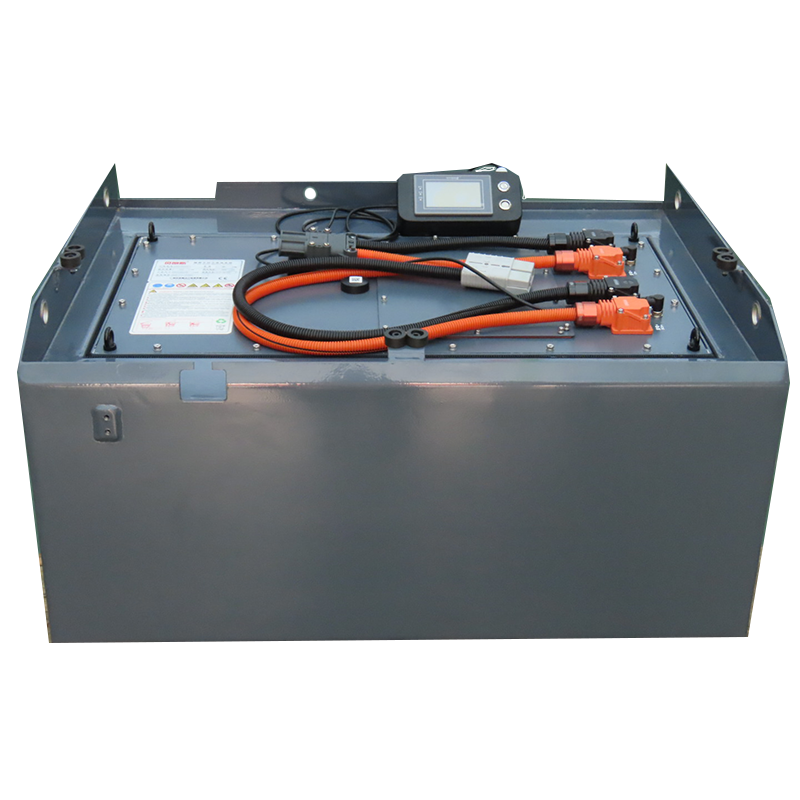
The TCO advantages of industrial lithium batteries are prominent
Time:2025-07-15 13:48:29
Browse:15
In today's era of rapid iteration in industrial automation, logistics warehousing, and intelligent manufacturing, cost control and efficiency improvement of power equipment have become the core demands for enterprises to reduce costs and increase efficiency.
In today's era of rapid iteration in industrial automation, logistics warehousing, and intelligent manufacturing, cost control and efficiency improvement of power equipment have become the core demands for enterprises to reduce costs and increase efficiency. Industrial lithium batteries, as a core alternative to traditional lead-acid batteries and diesel power, have long surpassed the superficial understanding of "environmental protection and high efficiency". The significant advantage of total cost of ownership (TCO) is now becoming the core driving force for large-scale replacement of traditional power sources and the layout of lithium battery upgrades in various industries, and also a key leverage for achieving low-cost and high-capacity development in the industrial field.
The TCO (Total Cost of Ownership) does not merely refer to the initial purchase price of the equipment. It encompasses all expenditures throughout the entire life cycle, including procurement costs, usage costs, maintenance costs, replacement costs, and idle losses. For industrial scenarios, the TCO of power equipment directly affects the operating profits of enterprises. Especially in high-frequency usage scenarios such as for forklifts, AGV carts, and industrial cleaning equipment, the subtle differences in TCO, accumulated over time, can result in significant cost disparities. Compared to traditional power solutions, the TCO advantage of industrial lithium batteries lies in every key aspect throughout the entire life cycle. It is not a short-term "cost-effectiveness", but a long-term "optimal cost".
The TCO advantages of industrial lithium batteries are primarily reflected in the balance of procurement cost performance and the long-term cost reduction advantage. Many enterprises initially fall into the misconception that "the initial purchase price of industrial lithium batteries is higher than that of lead-acid batteries", but they overlook the logic of cost reduction over the long term. Although the initial purchase price of traditional lead-acid batteries is low, their cycle life is only around 500 times, and they need to be completely replaced after about 3 years. In contrast, high-quality industrial lithium batteries have a cycle life of over 2000 times and a service life of up to 5-8 years, and some high-end products can even last for 10 years, which is 2-3 times that of lead-acid batteries.
Take industrial forklifts as an example. The initial purchase price of a lead-acid battery forklift is 1-2 thousand yuan lower than that of a lithium-ion forklift. However, the battery needs to be replaced twice within 5 years, and in addition to the labor and downtime losses during the replacement process, the total purchase-related expenses are much higher than those of the lithium-ion forklift. Meanwhile, the lithium-ion forklift does not need to replace the battery frequently. Within 5 years, it only needs to bear the initial purchase cost. After long-term amortization, the unit-time purchase cost is much lower than the traditional lead-acid solution. This is also one of the core reasons why more and more logistics enterprises prefer to choose lithium-ion forklifts.
Secondly, the low maintenance cost and zero idle loss of industrial lithium batteries further enhance their TCO advantages. During the use of traditional lead-acid batteries, regular water replenishment, checking of electrolyte concentration, and acid neutralization treatment are required. Not only does this involve the investment of dedicated operation and maintenance personnel, but also the need to equip with related maintenance consumables. The annual maintenance cost can reach several thousand yuan. At the same time, lead-acid batteries have low charging efficiency, requiring 8-10 hours of charging to meet the 4-6 hours of working requirements. They cannot be charged and used immediately and can only be charged at fixed points for a long time, which easily leads to equipment idleness and indirectly increases operating costs.
Industrial lithium batteries require no complex maintenance. There is no need to add water or check the electrolyte. Only a simple visual inspection is needed on a regular basis. This can save a significant amount of maintenance personnel and consumable costs annually. At the same time, industrial lithium batteries have extremely high charging efficiency. They can be fully charged in 2-3 hours and can be used while charging. They can be charged during workers' breaks to avoid equipment idling while waiting for charging, significantly improving equipment utilization and indirectly reducing the power cost per unit production capacity.
In response to the core confusion faced by industrial enterprises when choosing power solutions, by leveraging the TCO advantages, we have compiled two sets of frequently asked questions and precise answers, helping enterprises clearly understand the long-term value of industrial lithium batteries:
Question 1: The initial purchase price of industrial lithium batteries is higher. For small and medium-sized enterprises with limited budgets, is choosing lithium batteries really able to reduce the total cost of ownership (TCO)?
Answer: For small and medium-sized enterprises with limited budgets, industrial lithium batteries remain the optimal choice for reducing TCO. Although the initial purchase price is slightly higher, the industrial equipment of these enterprises is mostly used frequently and the maintenance personnel are limited. The long lifespan and low maintenance characteristics of industrial lithium batteries can quickly spread out the initial costs - typically, the initial purchase price difference can be recovered within 3 years, and 30%-50% of the total power cost can be saved within 5 years. In addition, there are currently various installment purchase and leasing schemes for lithium battery equipment available on the market, which can alleviate the budget pressure of these enterprises. They can enjoy the TCO advantages of lithium batteries without having to bear the high initial investment.
Question 2: The environmental conditions in different industrial settings (such as high-temperature workshops and outdoor ports) vary significantly. Will this affect the lifespan of industrial lithium batteries and thereby diminish their TCO advantages?
Answer: No. High-quality industrial lithium batteries use stable cell types such as lithium iron phosphate, combined with an intelligent battery management system (BMS), and can operate in a wide temperature range of -20°C to 60°C. Some products also come with an electric heating function, and their performance in low-temperature environments far exceeds that of lead-acid batteries. At the same time, industrial lithium batteries have a protection level of IP54 or above, which can effectively resist dust and water erosion and are suitable for complex industrial scenarios such as high-temperature workshops and outdoor ports. Compared to traditional lead-acid batteries, whose lifespan is significantly shortened in harsh environments (such as a 50% reduction in lifespan in high-temperature environments), industrial lithium batteries still maintain a stable lifespan in complex scenarios and will not weaken the TCO advantage due to environmental differences. Instead, their environmental adaptability can reduce equipment failures and replacement costs.
With the continuous maturation of industrial lithium battery technology, the cost of battery cells has continued to decline, further highlighting their TCO advantages. Currently, industrial lithium batteries have achieved large-scale application in multiple fields such as logistics warehousing, automotive manufacturing, port terminals, and industrial cleaning. This not only helps enterprises reduce long-term operating costs but also, with its efficient and environmentally friendly characteristics, assists enterprises in achieving green transformation, aligning with the national "carbon neutrality" strategy requirements.
In the future, with the deep integration of intelligent technology and industrial lithium batteries, the accuracy of battery management will further improve, the service life of industrial lithium batteries will continue to extend, and the TCO advantages will become more prominent. For industrial enterprises, abandoning the short-term thinking of "only considering the initial price", focusing on the TCO control throughout the entire life cycle, and choosing industrial lithium batteries as the power solution is not only a wise move to reduce costs and increase efficiency, but also a core competitiveness for achieving long-term sustainable development.