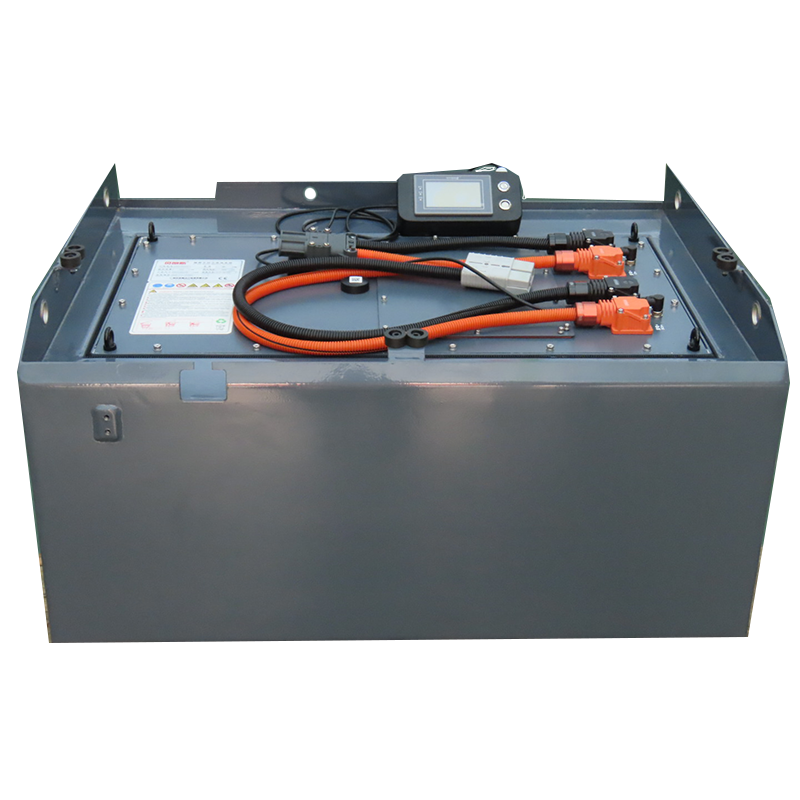
The upgrade of intelligent BMS technology has raised the safety level of industrial lithium batteries to a new height
Time:2025-07-15 13:48:05
Browse:607
With the continuous iteration and upgrading of intelligent BMS technology, it has shifted from passive protection to active warning, and from single monitoring to full lifecycle management.
In the current era of industrial intelligence and accelerated transition to new energy, industrial lithium batteries have been widely applied in core scenarios such as energy storage stations, electric forklifts, intelligent equipment, and communication base stations. Their safe and stable operation directly affects industrial production efficiency, personnel and property safety, and the sustainable development of the new energy industry. The shortcomings of traditional battery management systems (BMS) in terms of monitoring accuracy, response speed, and collaborative control have gradually become inadequate to meet the safety requirements of high-load, long-cycle, and complex working conditions in industrial scenarios. With the continuous iteration and upgrading of intelligent BMS technology, it has shifted from passive protection to active warning, and from single monitoring to full lifecycle management, completely breaking through the bottleneck of industrial lithium battery safety management and promoting the safety level of industrial lithium batteries to a new stage.
The safety risks of industrial lithium batteries mainly stem from issues such as inconsistency in cell quality, overcharging and overdischarging, abnormal temperature, and aging of wiring. As the "brain" of industrial lithium batteries, the technical level of BMS directly determines the safety boundaries of the battery system. Traditional BMS mostly adopt a fixed threshold monitoring mode, which can only achieve basic protection against overcharging and overdischarging. It has weak predictive ability for potential risks such as cell degradation and local temperature rise, and has a high response delay. It often triggers protection only after the risks expand, making it difficult to avoid safety accidents. Especially in scenarios such as industrial energy storage and heavy equipment, battery groups are large in scale and the working conditions are complex. The limitations of traditional BMS are more prominent, becoming the core pain point restricting the large-scale application of industrial lithium batteries.
The key breakthrough point in the upgrade of intelligent BMS technology lies in the comprehensive improvement of monitoring accuracy and scope, achieving a leap from "single-point monitoring" to "full-area perception". Unlike the traditional BMS that only monitors the voltage and current of battery cells, the upgraded intelligent BMS integrates high-precision sensing modules, which can simultaneously collect multi-dimensional parameters such as voltage, current, temperature, and internal resistance of each battery cell. The sampling accuracy has been enhanced to the millivolt level, enabling precise detection of the subtle performance changes of battery cells and timely identification of potential hazards such as consistency degradation and local short circuits. At the same time, by leveraging big data analysis technology, the intelligent BMS can perform real-time calculations and trend predictions on the collected data, enabling early identification of safety risks, achieving "early detection, early warning, and early handling", and shifting the safety protection threshold forward.
Secondly, the collaborative control and rapid response capabilities of the intelligent BMS have significantly enhanced the emergency handling efficiency of industrial lithium batteries. The upgraded intelligent BMS adopts a distributed architecture design, enabling seamless collaboration with systems such as PCS and EMS. It not only can independently complete the safety control of the battery system but also can dynamically adjust the battery charging and discharging strategies based on changes in industrial production loads and grid fluctuations, avoiding potential safety hazards caused by overloading or underloading. After the safety warning is triggered, the intelligent BMS can respond within milliseconds, quickly cutting off the charging and discharging circuits and sending warning information to the operation and maintenance platform, clearly indicating the location, type and severity of the hazard, providing precise guidance for the operation and maintenance personnel, and minimizing the accident losses to the greatest extent. In addition, the intelligent BMS supports both cloud remote monitoring and local operation and maintenance modes. Operation and maintenance personnel can view the battery operation status anytime and anywhere, without the need for on-site值守, significantly improving the operation and maintenance efficiency and reducing the operation and maintenance costs.
Regarding the core issues in the safety management of industrial lithium batteries, by leveraging the technical advantages of the upgraded intelligent BMS, the following two sets of questions and answers can clearly explain the key pain points and solutions:
Question 1: After the upgrade of the intelligent BMS technology, can it solve the problem of consistency degradation of battery cells during the long-term use of industrial lithium batteries? The answer is yes. During the long-term use of industrial lithium batteries, differences in the material of the battery cells and the frequency of charging and discharging will lead to a gradual decline in consistency, which in turn causes local overheating, overcharging and other safety hazards. These are the core pain points that traditional BMS cannot solve. After the upgrade of the intelligent BMS, by real-time collection of multiple dimensions of parameters of each battery cell and using AI algorithms to analyze the degradation trend of the battery cells, it automatically adjusts the charging and discharging current of each battery cell to achieve balanced management of the battery cells, slowing down the speed of consistency degradation. At the same time, the intelligent BMS can accurately identify the battery cells with severe degradation and promptly issue a replacement warning to avoid the safety operation of the entire battery pack being affected by a single battery cell failure, significantly extending the service life and safety cycle of industrial lithium batteries.
Question 2: In extreme industrial conditions of high temperature, high humidity and high vibration, how does the intelligent BMS ensure its stable operation and perform the role of safety control? Extreme industrial conditions are the key test for the stability of BMS and are also the weak point of traditional BMS. The intelligent BMS uses industrial-grade components that are resistant to high temperature, vibration and humidity in its hardware, optimizes the circuit design, enhances the anti-interference ability, and can adapt to the extreme temperature range of -40°C to 85°C and high-intensity vibration environment, ensuring stable operation in complex conditions. In software, the intelligent BMS adopts redundant design. When a monitoring module fails, the backup module can quickly switch over to avoid control interruption; at the same time, through dynamic adaptive algorithms, it can adjust the monitoring frequency and protection threshold according to the changes in the working conditions, ensuring that it can accurately detect potential safety hazards in extreme conditions and play a reliable safety control role.
The upgrade of intelligent BMS technology not only resolves the core pain points of industrial lithium battery safety management, but also meets the development needs of the industrial new energy transformation. It lays a solid foundation for the large-scale and high-safety application of industrial lithium batteries. With the deep integration of artificial intelligence, big data, and Internet of Things technologies with BMS, in the future, intelligent BMS will iteratively evolve towards more accurate predictions, more efficient collaboration, and more convenient operation and maintenance, further improving the full life cycle safety management system of industrial lithium batteries.
In conclusion, the upgrade of intelligent BMS technology is not merely a simple functional optimization, but a fundamental transformation of the industrial lithium battery safety management model. It eliminates potential safety hazards at the source, enhances emergency response capabilities, reduces operation and maintenance costs, promotes the industrial lithium battery safety level to a new height, and also provides a reliable safety guarantee for the high-quality development of industrial intelligence and the new energy industry.