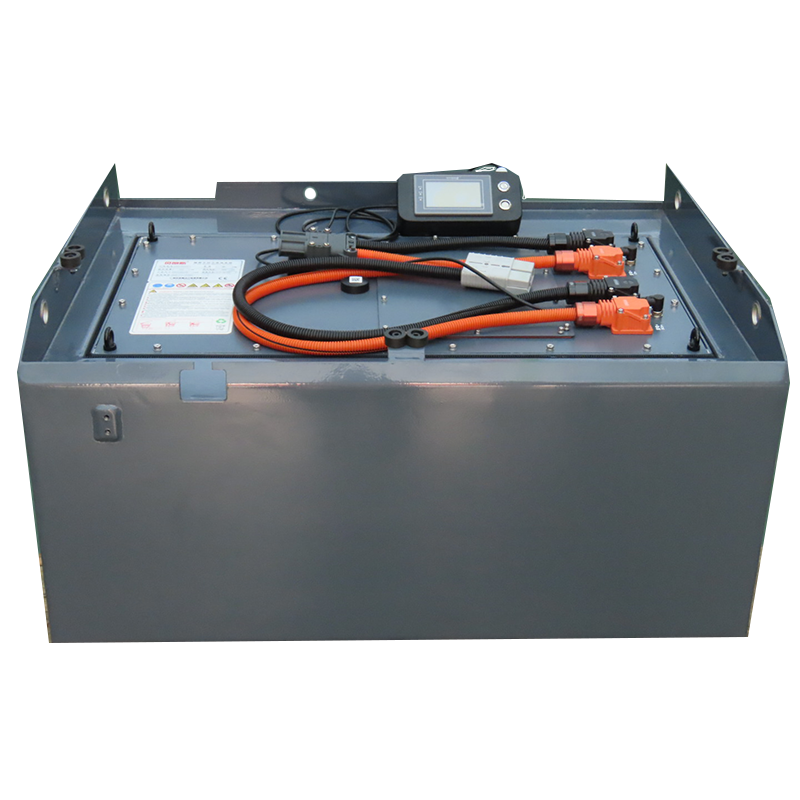
The capacity of lead-acid batteries suitable for forklifts of different tonnages
Time:2025-07-15 13:43:05
Browse:207
Driven by the in-depth implementation of the "carbon neutrality" goal and the green transformation of the shipping industry, new energy vessels have advanced from pilot demonstrations to a critical stage of large-scale development.
Driven by the in-depth implementation of the "carbon neutrality" goal and the green transformation of the shipping industry, new energy vessels have advanced from pilot demonstrations to a critical stage of large-scale development. And lithium batteries as the core supporting components of them are now experiencing unprecedented development opportunities. Unlike the red-harbor competition in the field of new energy vehicles, the lithium battery power sector for ships is still in the early stages of the blue ocean. The combined forces of policy guidance, market demand, and technological iteration are reshaping the supporting industry landscape, driving lithium battery power enterprises to transform towards specialization, scene-based, and high-end directions, and opening up new growth spaces.
The continuous release of policy benefits has laid a solid foundation for the development of power lithium battery components, which is the core support for the realization of this opportunity. Currently, the decarbonization process of the global shipping industry is accelerating. China has successively introduced policies such as "Opinions on Accelerating the Green and Intelligent Development of Inland Vessels" and "Action Outline for Green Development of the Shipbuilding Industry (2024-2030)", clearly promoting the electrification process of ships and encouraging the application of battery-powered technologies in various types of ships and different transportation distance scenarios. At the same time, coastal and inland provinces such as Jiangsu, Shanghai, and Fujian have successively introduced supporting policies such as financial subsidies and technological support to help power lithium batteries and new energy ships achieve deep integration. At the international level, countries and regions such as the European Union and Norway have promoted the popularization of electric ships by exempting emission taxes and providing purchase subsidies, indirectly driving the release of export potential for power lithium battery components in China. The continuous penetration of policy benefits has cleared the development obstacles for the power lithium battery component industry.
The market demand has experienced multiple surges, providing continuous impetus for the development of power lithium batteries. With the acceleration of green transformation in scenarios such as inland river shipping, short-distance coastal transportation, and port operations, the demand for power lithium batteries from different types of new energy vessels shows differentiated growth. Short-distance vessels such as inland passenger ships, sightseeing boats, and small cargo ships have high requirements for the safety and economy of power lithium batteries and have achieved large-scale supply; medium and large-sized vessels such as offshore bulk carriers, tugboats, and ferries are gradually undergoing hybrid or pure electric renovations, and the demand for lithium battery products with high energy density and long cycle life is surging. According to industry predictions, by 2026, the market size of electric vessels in China will reach 36.75 billion yuan, and the demand for lithium batteries will increase from 173.2 megawatt-hours in 2021 to 1.12 gigawatt-hours. The vast market space has become the core driving force for power lithium battery enterprises to explore new market segments.
Taking into account the current state of the industry development, there are still two core questions in the field of power lithium battery support at present. Only by accurately resolving these issues can we better seize the development opportunities:
Question 1: The operating environment of ships is complex. How can power lithium batteries overcome the bottlenecks of safety and adaptability and adapt to various ship scenarios? The answer is to focus on scenario-based research and technological upgrades, and build a comprehensive safety guarantee system. Unlike the automotive scenario, ships operate in complex environments such as high humidity, high corrosiveness, and strong vibrations, and the consequences of battery failures during navigation are even more serious. Therefore, lithium battery enterprises need to break away from the research thinking of automotive lithium batteries and develop dedicated lithium battery products for ships - using lithium iron phosphate cells with excellent thermal stability, integrating technologies such as nano insulation and package-level fire monitoring, to prevent heat spread from the source; optimizing battery packaging processes to enhance waterproof, anti-corrosion, and shock resistance performance, and adapting to different water areas such as inland rivers and coastal areas; at the same time, combining with intelligent energy management systems to achieve precise power distribution, balancing safety and energy efficiency. For example, the lithium battery system provided by Zhongxinhang for the "Weiqiao Lvxing 1" ship perfectly adapts to the operational needs of offshore bulk carriers through lightweight and easy-maintenance design.
Question 2: How can the power lithium battery support system break through the bottlenecks of cost and industrial chain synergy to achieve large-scale development? The answer is to rely on industrial chain synergy for cost reduction and business model innovation, and to remove development obstacles. Currently, the initial cost of special lithium batteries for ships is relatively high, and the synergy between the upstream and downstream of the industrial chain is insufficient, which hinders large-scale support. On one hand, lithium battery enterprises can deeply cooperate with ship manufacturers and material suppliers, through bulk purchasing and technology sharing, to reduce the costs of core components such as battery cells and packaging materials; on the other hand, they can explore a new business model of "battery leasing + operation services" to alleviate the initial investment pressure of ship enterprises, and at the same time, through professional operation, extend the service life of the batteries and improve the economic benefits throughout the entire life cycle. In addition, leading lithium battery enterprises can take the lead in promoting the standardization of the charging and energy supply system, explore the coordinated development of high-voltage charging and battery swapping modes, and combine with the "ship - shore - cloud" integrated solution to build a complete business loop, promoting the power lithium battery support system from pilot projects to large-scale development.
The pace of technological iteration is continuously accelerating, enabling and upgrading the power lithium battery for its application. Currently, the technological breakthroughs in power lithium battery in terms of energy density, cycle life, and fast charging capability have continuously expanded its application boundaries in the field of new energy ships. The ship-specific lithium iron phosphate batteries launched by leading enterprises have reached the industry-leading level in terms of energy density. Combined with efficient permanent magnet synchronous motors and intelligent management systems, they can effectively enhance the ship's cruising range and operational stability. The research and development of new lithium battery technologies such as solid-state batteries and sodium-ion batteries are expected to further address the pain points of traditional lithium batteries' insufficient energy density and limited cruising range, and meet the requirements of medium and long-distance new energy ships. At the same time, the improvement of lithium battery recycling technology will enable resource recycling, reduce the environmental pressure on the industry, and promote the high-quality development of the power lithium battery supporting industry.
In conclusion, the green transformation wave of new energy ships has brought multiple opportunities in terms of policy, market and technology for the supporting industry of power lithium batteries. In the future, only by focusing on scenario-based research and development, strengthening industrial chain collaboration, innovating business models, breaking through core technologies and cost bottlenecks, can the integration of power lithium battery support and new energy ships be promoted, helping the shipping industry achieve full-chain decarbonization, and at the same time, enabling the power lithium battery industry to open up new growth curves and achieve a dual improvement in economic and environmental benefits.