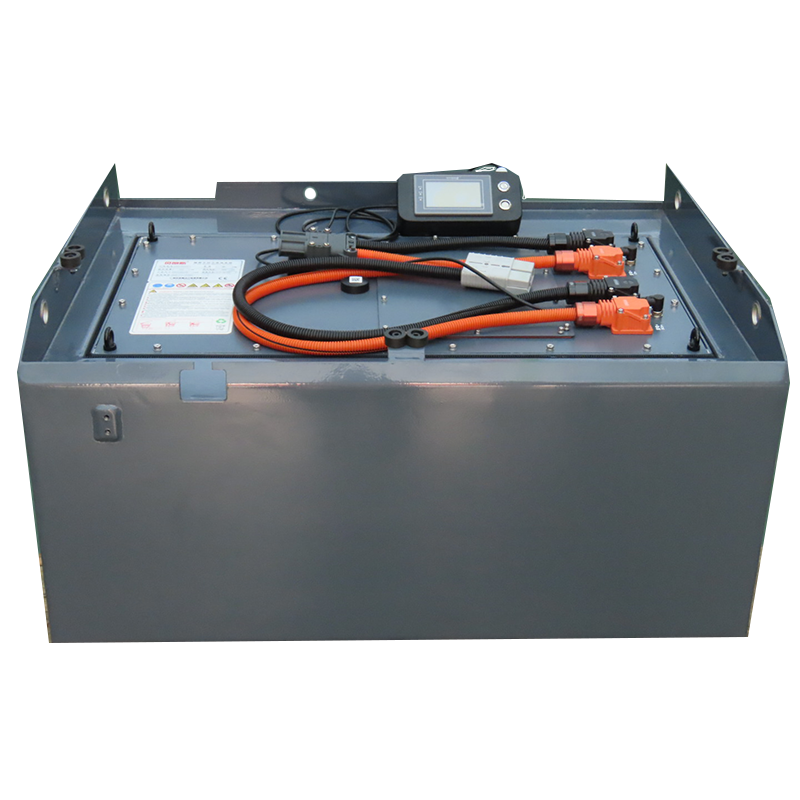
Lithium batteries to Replace Lead-Acid Batteries as the Mainstream in Forklifts
Time:2025-07-15 13:47:41
Browse:475
Driven by the advancement of Industry 4.0 and the implementation of the "carbon neutrality" goal, the update and iteration of industrial equipment have entered an acceleration period.
Driven by the advancement of Industry 4.0 and the implementation of the "carbon neutrality" goal, the update and iteration of industrial equipment have entered an acceleration period. As the core handling equipment for warehousing and manufacturing, forklifts are now undergoing a disruptive transformation in their power systems. The lead-acid battery forklifts that previously dominated the market are gradually being squeezed out by lithium-ion battery forklifts, and the substitution of lithium-ion batteries for lead-acid batteries has shifted from an "optional trend" to an "inevitable mainstream". It has become the most representative symbol of the industrial equipment update trend, meeting the needs of enterprises for cost reduction and efficiency improvement, as well as aligning with the development orientation of green and low-carbon industries.
Over the past few decades, lead-acid batteries have been the preferred power source for forklifts due to their low initial procurement costs and mature technology. They have been widely used in various industrial scenarios. However, as industrial production efficiency has increased and environmental protection requirements have become stricter, the inherent shortcomings of lead-acid batteries have become increasingly prominent, making them increasingly unable to meet the efficient, green, and intelligent requirements of modern industry. Their charging efficiency is low, and it usually takes 8-10 hours to fully charge. After charging, they need to cool down before being used again, which seriously affects the efficiency of forklifts for all-day operations. Daily maintenance is cumbersome, requiring regular water addition, checking acidity, and cleaning corrosion residues, which not only consumes labor costs but also poses safety hazards of acid leakage. The service life is short, with a cycle life of only around 1,500 times, and they typically need to be replaced after 3-5 years. The overall cost of long-term use is not low, and the recycling of lead-acid batteries is difficult, causing environmental pollution, which is contrary to the current green development concept.
Compared to lead-acid batteries, the core advantages of lithium batteries precisely match the usage requirements of modern industrial forklifts, becoming the core power source for replacement and upgrade. Lithium-ion batteries have extremely high charging efficiency, taking only 1-2 hours to fully charge, and they support immediate use. Workers can complete recharging during breaks, enabling 24-hour uninterrupted operations of forklifts, significantly improving the turnover efficiency of warehousing and logistics. There is no need for complex daily maintenance, as the sealed design avoids acid leakage and gas emissions, reducing the labor maintenance costs of enterprises and improving the safety of the working environment. The cycle life can reach 3,000-5,000 times, with a service life of up to 8-10 years. Although the initial procurement cost is 2-3 times higher than that of lead-acid batteries, the overall cost over the long term is 30% lower than that of lead-acid batteries, with significant cost advantages.
In addition, policy guidance and industrial technology upgrades have further accelerated the process of forklift lithium-ion battery substitution. The national "carbon neutrality" policy clearly requires the reduction of carbon emissions in the industrial sector. Lithium-ion forklifts have a charging efficiency of over 95%, which is 30% more energy-efficient than lead-acid batteries, and they can be recycled, with carbon emissions far lower than those of lead-acid batteries, making them an important choice for enterprises to implement green production. At the same time, domestic lithium battery technology is becoming increasingly mature, and the application of lithium iron phosphate materials has significantly improved the safety and stability of lithium-ion batteries. In addition, leading forklift manufacturers such as Hangcha and Heli have increased investment in lithium-ion product research and development, launching lithium-ion forklifts suitable for different scenarios, further enriching product supply and reducing the threshold for replacement for enterprises.
In response to the most concerned issues of enterprises in the process of forklift lithium-ion battery substitution, based on industry experience, the following clear answers are provided to help enterprises efficiently complete the upgrade and transformation:
Question 1: Do enterprises that currently have lead-acid forklifts need to directly replace them with brand-new lithium-ion forklifts? Will the cost be too high?
Answer: There is no need to blindly replace with brand-new equipment. Based on the condition and service life of the existing forklifts, flexible options for upgrading can be chosen. For lead-acid forklifts with a service life of 3 years or less and good condition, they can be "converted from lead to lithium", replacing the original lead-acid battery with a compatible lithium-ion battery, combined with a dedicated charger. The conversion cost is only 1/3-1/2 of the cost of purchasing a brand-new lithium-ion forklift, significantly reducing the upgrade cost; For forklifts that have been in use for an extended period and have poor condition, it is recommended to directly replace them with brand-new lithium battery forklifts to avoid the double cost of frequent maintenance and renovation in the future. In the long run, regardless of whether it is renovation or replacement, the low maintenance, long lifespan, and high efficiency characteristics of lithium battery forklifts will gradually offset the initial investment. Within 3-5 years, the cost can be recovered, and the long-term benefits will be more considerable.
Question 2: Does the performance of lithium battery forklifts remain stable in low-temperature and high-intensity operation scenarios? Do they have advantages compared to lead-acid forklifts?
Answer: The performance of lithium battery forklifts in extreme environments far exceeds that of lead-acid forklifts, and they are fully compatible with various industrial scenarios. Currently, the mainstream lithium battery forklifts use lithium iron phosphate batteries, combined with an intelligent battery management system (BMS), and can operate stably in environments ranging from -20℃ to 60℃. In low-temperature environments, they still maintain over 85% capacity, while the capacity of lead-acid batteries drops below 60% at -10℃ and cannot meet the requirements of low-temperature storage, outdoor operations, etc.; In high-intensity operation scenarios, lithium battery discharges stably, without the problem of "getting weaker as used" like lead-acid batteries, and supports rapid recharging, which can adapt to multi-shift, high-intensity handling requirements, significantly reducing operation downtime and improving production efficiency.
Currently, the trend of industrial equipment renewal is still ongoing, and the trend of replacing forklifts with lithium batteries is irreversible. With the continuous upgrading of lithium battery technology, the gradual reduction of costs, and the increase in policy support, lithium battery forklifts will gradually fully replace lead-acid forklifts, covering various industrial scenarios such as warehousing logistics, manufacturing, and cold chain transportation. For enterprises, adapting to this trend and timely completing the upgrade and transformation of the forklift power system can not only reduce operating costs, improve production efficiency, but also practice the green production concept and enhance the core competitiveness of the enterprise, seizing the initiative in the wave of industrial high-quality development. In the future, with the deep integration of intelligent and connected technologies with lithium battery forklifts, it will further promote the intelligent upgrade in the industrial handling field, injecting new impetus into industrial high-quality development.