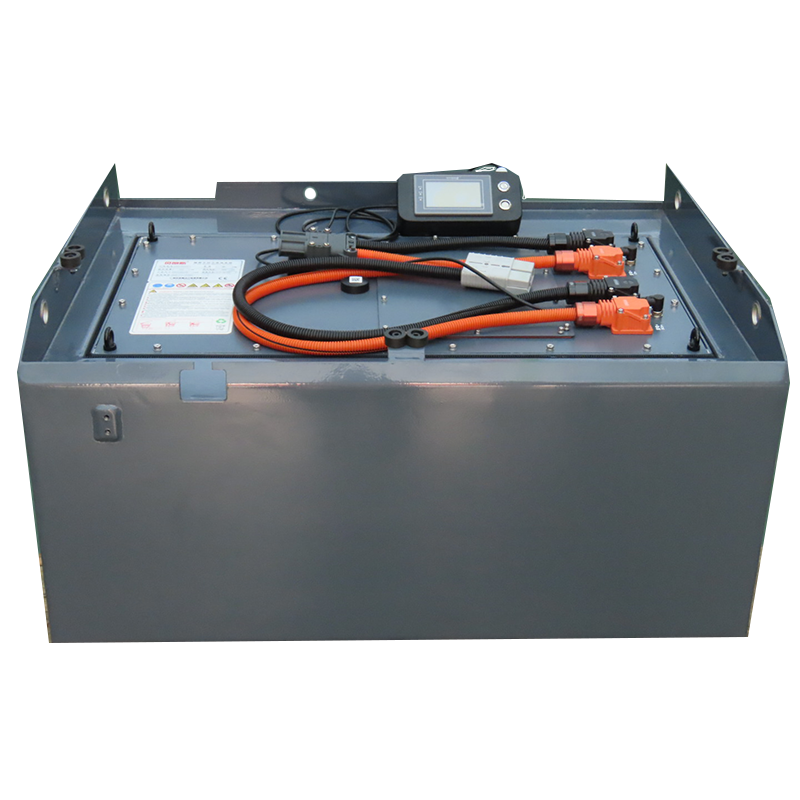
New Trends in Industrial Lithium Batteries: Multi-Site Applications Drive Capacity Expansion
Time:2025-07-15 13:48:29
Browse:72
The comprehensive explosion of multi-site demands is becoming the core engine driving the expansion of industry capacity.
Driven by the deep implementation of the "carbon neutrality" goal and the accelerated rollout of Industry 4.0, industrial lithium batteries have broken free from their single-application limitations and gradually penetrated into multiple core areas such as energy storage, construction machinery, intelligent logistics, and low-altitude economy. The comprehensive explosion of multi-site demands is becoming the core engine driving the expansion of industry capacity. At the same time, it is forcing technological iteration and industrial upgrading, forming a virtuous cycle of "demand driving capacity, capacity supporting application", and outlining a brand-new development picture for the industrial lithium battery industry.
In the past, the application of industrial lithium batteries was mainly concentrated on the power supply of small industrial equipment, with limited market demand, and capacity expansion always maintained a moderate pace. However, now, as various industries accelerate their green transformation and intelligent upgrading, the application boundaries of industrial lithium batteries continue to expand. The individualized demands in different scenarios directly drive the capacity to enter a large-scale growth channel, becoming the most distinct development trend of the industry.
The explosive growth in the energy storage sector is the primary driving force for the expansion of industrial lithium battery capacity. In the construction of the new power system, the demand for high safety and long cycle life lithium batteries in scenarios such as industrial and commercial energy storage, grid-side energy storage, and household energy storage has surged, especially lithium iron phosphate system batteries, with their stable performance becoming the preferred choice in the energy storage field. At the same time, the overseas energy storage market continues to heat up, and domestic leading enterprises accelerate their overseas expansion, further amplifying the capacity demand and promoting the continuous rise of the industry's expansion热潮.
The electrification transformation in the construction machinery and intelligent logistics sectors injects new vitality into the growth of industrial lithium battery capacity. Traditional construction machinery relies on fuel power, which not only has high energy consumption and significant pollution, but also has high maintenance costs. However, lithium battery-driven excavators, loaders, forklifts, etc., with their advantages of energy saving, environmental protection, and low maintenance, gradually achieve substitution. In addition, the wide application of AGV robots and intelligent handling equipment in e-commerce warehouses and factory workshops has continuously increased the demand for small high-rate industrial lithium batteries, further expanding the capacity release space.
The rise of emerging fields has further created new growth points for the production capacity demand of industrial lithium batteries. The rapid development of emerging industries such as low-altitude economy and humanoid robots has placed higher demands on high energy density and lightweight industrial lithium batteries, forcing enterprises to expand their high-end production capacity layout. At the same time, the technology for the staged utilization of retired lithium batteries is becoming increasingly mature, and its application in low-speed industrial equipment and energy storage scenarios is gradually taking shape. This not only extends the industrial chain but also indirectly promotes the rational allocation and efficient utilization of production capacity.
In response to the demand for capacity expansion brought about by multiple application scenarios, the industry is also facing numerous questions and challenges. The following two core issues are the focus of attention both within and outside the industry:
Question 1: While multiple application scenarios drive the expansion of production capacity, how can we avoid the situation of overcapacity and "internal competition" caused by blind expansion?
Answer: The core premise of capacity expansion is the authenticity and sustainability of demand. The key to avoiding blind expansion is to adhere to the "order-oriented" principle and the layout of technological differentiation. After the industry adjustment in the previous few years, "order-capacity" has become an industry consensus. Enterprises need to expand production based on clear long-term contract orders, combined with their own technological advantages, focusing on high-value-added niche fields, such as high-end energy storage lithium batteries and special industrial equipment lithium batteries, rather than blindly following trends to expand general production capacity. At the same time, the industry needs to strengthen self-discipline, enhance regional collaboration and market supervision, optimize the production capacity structure, promote the concentration of production capacity to high-quality enterprises, achieve precise matching of production capacity and demand, and avoid "competitive over-expansion".
Question 2: The performance requirements for lithium batteries vary significantly across different industrial scenarios. How can we achieve the coordinated development of capacity expansion and scenario adaptation?
Answer: The core to achieving the adaptation of production capacity to scenarios lies in "flexible capacity construction" and "technological customization upgrade". During the expansion process, enterprises should build flexible production lines that can not only meet the production demands for large-scale standardized products, but also quickly switch to produce lithium battery products of different specifications and performances, adapting to the differentiated needs of various scenarios such as energy storage, construction machinery, and intelligent logistics. At the same time, increase research and development investment, optimize product performance based on the pain points of different scenarios, such as developing wide-temperature lithium batteries for low-temperature environment scenarios and high-rate lithium batteries for high-frequency operation scenarios. Through technological customization, enhance the adaptability to scenarios, so that capacity expansion truly serves the upgrade of scenario applications, achieving a collaborative win-win situation between the two.
Overall, the drive for capacity expansion driven by multiple scenarios is an inevitable trend in the development of the industrial lithium battery industry, and it is also an important opportunity for the industry to transform from scale growth to high-quality development. In the future, with the continuous iteration of technology and the further penetration of scenarios, the industrial lithium battery industry will gradually break away from homogeneous competition and form a complete ecosystem of "scenario-driven technology, technology supporting capacity, and capacity serving scenarios". For enterprises, only by basing themselves on scenario needs and adhering to rational capacity expansion and technological innovation can they seize opportunities in the industry wave, achieve sustainable development, and promote the industrial lithium battery industry to move towards a higher-quality development stage.