Industrial Lithium Battery Maintenance Secrets: The Key to Extending Service Life
Time:2025-07-15 13:43:05
Browse:275
Mastering scientific maintenance techniques and grasping the key points of core maintenance can enable industrial lithium batteries to maintain stable performance for a long time, maximize their service life, and help enterprises reduce operational costs.
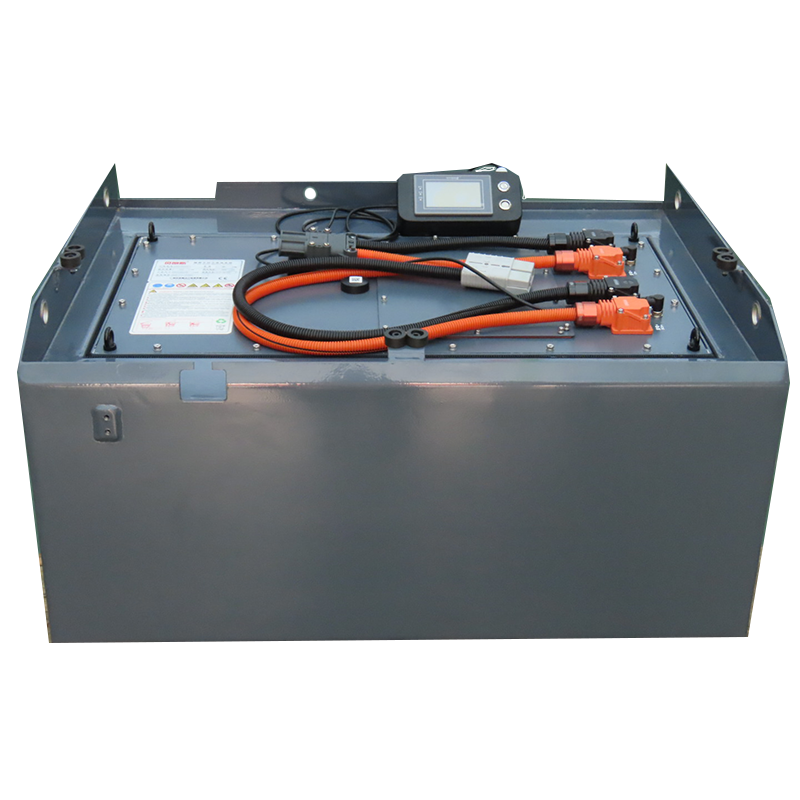
In industrial production, lithium batteries serve as the core power source and are widely used in forklifts, robots, energy storage devices, and automated production lines, among other critical scenarios. Their service life directly affects production efficiency, operation and maintenance costs, and equipment safety. Unlike consumer-grade lithium batteries, industrial lithium batteries have the characteristics of large capacity, high discharge power, and complex working conditions. If daily maintenance is neglected, it can easily lead to accelerated capacity degradation, a sharp decrease in cycle times, and even pose safety risks. Mastering scientific maintenance techniques and grasping the key points of core maintenance can enable industrial lithium batteries to maintain stable performance for a long time, maximize their service life, and help enterprises reduce operational costs.
I. The main causes of the decline in the lifespan of industrial lithium batteries (SEO core pain points)
The degradation of the lifespan of industrial lithium batteries is not accidental. It is mainly caused by the combined effects of internal chemical deterioration and improper external usage. Internally, during the charging and discharging process of lithium batteries, the positive and negative electrode materials gradually age, and the electrolyte decomposes, resulting in a decrease in ion migration efficiency and a gradual reduction in capacity. Externally, extreme temperatures, improper charging and discharging, environmental pollution, and long-term idleness will significantly accelerate internal deterioration, causing the lithium battery to "retire" prematurely.
Many enterprises have a misconception that industrial lithium batteries are "maintenance-free" and only require normal charging and discharging. In fact, this neglect of maintenance will shorten the lifespan of lithium batteries by 30% to 50%. In reality, the maintenance of industrial lithium batteries does not require complex operations. The key lies in "controlling the environment, regulating charging and discharging, frequently inspecting, and properly storing when idle". By grasping these four key points, it is possible to effectively delay degradation and extend the service life of the batteries.
II. Core Secrets for Maintaining Industrial Lithium Batteries (Practical and Feasible for Implementation)
1.Strictly control the environmental temperature and humidity to avoid extreme losses.
Industrial lithium batteries are extremely sensitive to temperature and humidity, which is the primary external factor affecting their lifespan. The optimal operating temperature for most industrial lithium batteries is 15°C - 35°C, and the storage temperature is 10°C - 25°C. When the temperature exceeds 40°C, the internal chemical reactions will accelerate sharply, the electrolyte will decompose, and the aging of the electrodes will double in speed. This not only shortens the lifespan but may also cause safety issues such as bulging and leakage. When the temperature is below 0°C, the discharge capacity of the lithium battery will significantly decrease, and forced charging and discharging will cause irreversible electrode damage.
In actual operation, lithium battery equipment should be placed in an area that is well-ventilated, dry, and free from direct sunlight. It should be kept away from heat sources (such as boilers and frequency converters) and cold sources (such as the air outlets of cold storage facilities), and should not be stored outdoors. If the production environment has a high humidity level (exceeding 75%), dehumidification equipment should be equipped to prevent water vapor from entering the battery and causing short circuits or corrosion; during hot seasons, the lithium battery's working temperature can be maintained stable by installing cooling fans and regularly stopping the machine to cool down.
2. Standardize charging and discharging practices to prevent excessive wear and tear.
The standardization of charging and discharging operations directly determines the cycle life of industrial lithium batteries (the standard cycle life of most industrial lithium batteries is 2000-5000 times; proper operation can approach the upper limit). The core principle is "light charging and light discharging, avoiding extremes", and full charging and deep discharging must be avoided.
When charging, only the original factory-compatible charger should be used. It is strictly prohibited to use general chargers or inferior chargers - the original factory chargers have been precisely matched and can achieve constant current and constant voltage charging, avoiding overcharging; inferior chargers will cause unstable charging voltage, leading to decomposition of the electrolyte and bulging of the battery. At the same time, during charging, ensure good ventilation of the environment to avoid excessively high temperatures during the charging process. After the charging is completed, promptly unplug the power source and do not perform long-term floating charging (long-term floating charging will keep the battery in a fully charged state, accelerating electrode aging).
During discharge, avoid completely depleting the lithium battery to 0%. It is recommended to charge the battery promptly when it has 20% to 30% of remaining power. Do not over-discharge (such as using equipment beyond the rated power of the lithium battery). Over-discharging will result in excessive current, generating a large amount of heat, and damaging the electrodes. Additionally, avoid frequent charging and discharging. If the equipment is not used for a long time, there is no need to repeatedly charge it. Maintaining 30% to 50% of power is sufficient.
3. Conduct regular inspections and maintenance, and promptly identify potential hazards.
The daily inspection of industrial lithium batteries does not require specialized equipment. The focus should be on the appearance, interfaces, and operating status. It is recommended to conduct an inspection at least once a week and a comprehensive check once a month. This can help detect potential problems in a timely manner and prevent minor issues from escalating into major failures.
Appearance inspection: Check if the battery casing has bulging, damage, leakage, discoloration, etc. If bulging or leakage occurs, stop using the device immediately, contact professionals for handling, and never attempt to disassemble it yourself; Interface inspection: Clean the dust and oil stains at the positive and negative terminals of the battery, check if the interfaces are loose or oxidized. When the oxidation is severe, use a dry soft cloth to wipe; avoid contact problems that may cause abnormal discharge and overheating; Operation inspection: Observe the temperature and voltage of the lithium battery during the device's operation. If there is abnormal overheating or excessive voltage fluctuation, stop the machine for inspection and troubleshoot the equipment load or the battery itself issues.
4. Scientifically handle idle lithium batteries to prevent long-term deterioration
In industrial production, some lithium battery equipment will be left idle for a long time due to the off-season of production or equipment maintenance. If the equipment is left idle improperly, the lithium battery will undergo a "passivation" phenomenon, resulting in a significant reduction in capacity and even inability to be used normally. The core of maintaining idle lithium batteries is "regular charging and dry storage".
Before putting it in storage, charge the lithium battery to 30% - 50%. Place it in a dry, ventilated, and cool storage environment, away from corrosive gases and sharp objects. During the storage period, recharge the battery once every 1-2 months, filling it up to 40% - 50% of its capacity. Avoid letting the battery become too low in charge, as this can cause it to become inactive. When reactivating it, perform 1-2 normal charging and discharging cycles first to restore the battery's activity, and then use it normally.
III. Common Maintenance Questions and Answers (Accurately Solving Practical Confusions)
Question 1: If industrial lithium batteries remain in standby mode for a long time, will this accelerate the decline in their lifespan?
Answer: Yes. When industrial lithium batteries are in standby mode, although no significant discharge occurs, there will still be a slight self-discharge reaction inside. If not timely recharged during long-term standby, the battery's power will gradually deplete, leading to "over-discharge", causing irreversible damage to the electrodes and accelerating capacity degradation. It is recommended that for lithium battery devices in long-term standby mode, the battery's power should be checked once every 7-10 days. If the power is below 30%, it should be promptly replenished to 40%-50%. At the same time, unnecessary power-consuming functions of the device should be turned off to reduce self-discharge losses.
Question 2: If the industrial lithium battery has a slight bulge, can it still be used?
Answer: It is not recommended to continue using it. The bulging of industrial lithium batteries is a direct manifestation of electrolyte decomposition and increased internal pressure, which is an irreversible damage indicating that the battery has already experienced aging or malfunction. Continuing to use it at this point will not only lead to a rapid decrease in capacity and reduced discharge efficiency, but also may cause the bulging to worsen, leakage, and even a fire safety hazard. The correct approach is to immediately stop using the battery, take safety precautions, and contact a professional manufacturer for recycling and disposal, replacing the new battery to avoid triggering production safety accidents.
IV. Summary: To extend the lifespan of industrial lithium batteries, the key lies in maintaining good practices on a daily basis.
The service life of industrial lithium batteries is not solely determined by their "inherent quality", but rather by the details of post-installation maintenance. For enterprises, the replacement cost of industrial lithium batteries is relatively high. Proper daily maintenance not only can extend their service life, reduce operation and maintenance costs, but also can prevent production shutdowns caused by battery failures and ensure the continuity of production.
Remember the key points: strictly control temperature and humidity, standardize charging and discharging procedures, frequently check potential hazards, and properly handle idle batteries. These four maintenance secrets, with no complex operations required and no excessive additional costs needed, can maximize the value of industrial lithium batteries. Developing a scientific maintenance habit ensures that each industrial lithium battery can operate stably for a long time, providing support for the enterprise's production.